Klik op + meer voor verdieping, figuren en resultaten.Click + more for detail, figures and results.
Bram van Hoof
Pharmaceutical Scientist | Business & Management
Utrecht, NederlandBeschikbaar per directAvailable nowRijbewijs BDriving licence B
ProfielProfile
Onderzoeksresultaten zijn pas bruikbaar als je snapt wat erachter zit. Toch wordt vaak alleen naar de uitkomst gekeken, zonder te weten wat die precies meet. Ik heb zowel in het lab als achter de dataset gestaan, en mijn farmaceutische achtergrond geeft me de context om data te plaatsen. Zo onderzocht ik negen maanden in het lab de toxiciteit van 3-MCPD op celniveau, voerde ik een meta-analyse uit naar myocarditis na vaccinatie en schreef ik een scoping review over hoe uitkomsten gemeten worden in real-world onderzoek. Met mijn masterspecialisatie in Business & Management koppel ik dit daarnaast aan wat het financieel betekent. Die combinatie maakt me een schakel tussen de onderzoekers die data verzamelen en de mensen die er beslissingen op nemen.
Research findings are only useful if you understand what sits behind them. Yet people often look only at the outcome, without knowing what it actually measures. I have worked both in the lab and behind the dataset, and my pharmaceutical background gives me the context to place data. I spent nine months in the lab studying the toxicity of 3-MCPD at cell level, carried out a meta-analysis on myocarditis after vaccination, and wrote a scoping review on how outcomes are measured in real-world research. My master's specialisation in Business & Management lets me link this to what it means financially. That combination makes me a bridge between the researchers who collect data and the people who make decisions based on it.
Waar ik naar zoekWhat I'm looking for
Real-world evidence & HEOR
Onderzoek met zorgdata en literatuur, en uitzoeken hoe uitkomsten precies gemeten worden.
Research with healthcare data and literature, and working out exactly how outcomes are measured.
Klinisch onderzoek & CROClinical research & CRO
Meewerken aan studies waarvan de data klopt, van opzet tot monitoring.
Contributing to studies with reliable data, from set-up to monitoring.
Lab & regulatory
Als research analist in het lab, of bij het onderbouwen van dossiers richting beoordelaars.
As a research analyst in the lab, or building the evidence for regulatory submissions.
Wie ik benWho I am
Sport
Ik sport veel: fitness, padel en hardlopen.
I'm active: gym, padel and running.
Technologie en AITechnology and AI
Ik volg nieuwe technologie op de voet en bouw graag zelf dingen met AI-tools, zoals een website met intakevragenlijst voor een klein bedrijf, en deze pagina.
I follow new technology closely and like building things with AI tools, such as a website with an intake questionnaire for a small business, and this page.
SociaalSocial
Meestal op pad met vrienden. Bij studievereniging U.P.S.V. organiseerde ik met zes anderen de 128e Dies Natalis.
Usually out with friends. At study association U.P.S.V. I organised the 128th Dies Natalis with six others.
MSc Drug Innovation, specialisatie Business & ManagementMSc Drug Innovation, specialisation Business & Management| Universiteit UtrechtUtrecht University
09/2024 – 09/2026
Onderzoeksmaster over de weg van een nieuw inzicht in een ziekte naar een nieuwe therapie, van drug discovery tot ontwikkeling en registratie van geneesmiddelen. Het grootste deel bestond uit eigen onderzoek: negen maanden labonderzoek in de farmacologie naar de toxiciteit van 3-MCPD op celniveau, en een scoping review in de farmaco-epidemiologie naar hoe uitkomsten gemeten worden in real-world evidence. Als keuzevak volgde ik onder meer Introduction to R for Life Sciences (9,0). Daarnaast volgde ik het managementprofiel van de Utrecht University School of Economics (7,7).
Research master covering the path from a new insight into a disease to a new therapy, from drug discovery to the development and registration of medicines. Most of the programme consisted of my own research: nine months of lab research in pharmacology on the toxicity of 3-MCPD at cell level, and a scoping review in pharmacoepidemiology on how outcomes are measured in real-world evidence. My electives included Introduction to R for Life Sciences (9.0). I also completed the management profile of the Utrecht University School of Economics (7.7).
Vakken en cijfersCourses and grades
Drug Discovery7,5
Drug Development and Regulation7,2
Introduction to R for Life Sciences9,0
Science Based Entrepreneurship9,0
Business Research and Operations8,5
International Business8,2
Public Procurement7,6
Financial Management7,4
Strategic Management of Innovation7,0
Marketing6,0
BSc College of Pharmaceutical Sciences | Universiteit UtrechtUtrecht University
09/2019 – 02/2024
Internationale, Engelstalige bachelor over de volledige route van een nieuw geneesmiddel: van het aangrijpingspunt in de cel en de farmacokinetiek tot het ontwerp en de synthese van het molecuul en het testen in patiënten. Het onderwijs was kleinschalig en projectgericht, met in elk vak een groepsproject rond een biomedisch vraagstuk. In Analytical Methods loste ik zo een forensische casus op door de identiteit en dosis van een stof te bepalen met HPLC, UPLC, LC-MS en GC. In Pharmaceutical Biotechnology werkte ik met DNA en eiwitten, en in In vitro models of disease en Advanced Immunopharmacology met moderne celmodellen en immunologische assays. In Advanced Pharmacoepidemiology doorliep ik in een klein team de volledige onderzoekscyclus, van protocol tot manuscript. Dat bracht me bij mijn onderzoeksproject in de farmaco-epidemiologie.
International, English-taught bachelor covering the full path of a new drug: from its target in the cell and its pharmacokinetics to the design and synthesis of the molecule and testing in patients. Teaching was small-scale and project-based, with a group project around a biomedical problem in every course. In Analytical Methods, for example, I solved a forensic case by determining the identity and dose of a substance using HPLC, UPLC, LC-MS and GC. In Pharmaceutical Biotechnology I worked with DNA and proteins, and in In vitro models of disease and Advanced Immunopharmacology with modern cell models and immunological assays. In Advanced Pharmacoepidemiology I went through the full research cycle in a small team, from protocol to manuscript. That led me to my research project in pharmacoepidemiology.
Gevolgde vakkenCourses taken
Epidemiology and Clinical Development of New Drugs
Onderzoek en werkervaringResearch and work experience
MSc Writing Assignment: Scoping Review | Divisie Farmaco-epidemiologie en Klinische Farmacologie, UIPSDivision of Pharmacoepidemiology and Clinical Pharmacology, UIPS
06/2026 – 08/2026
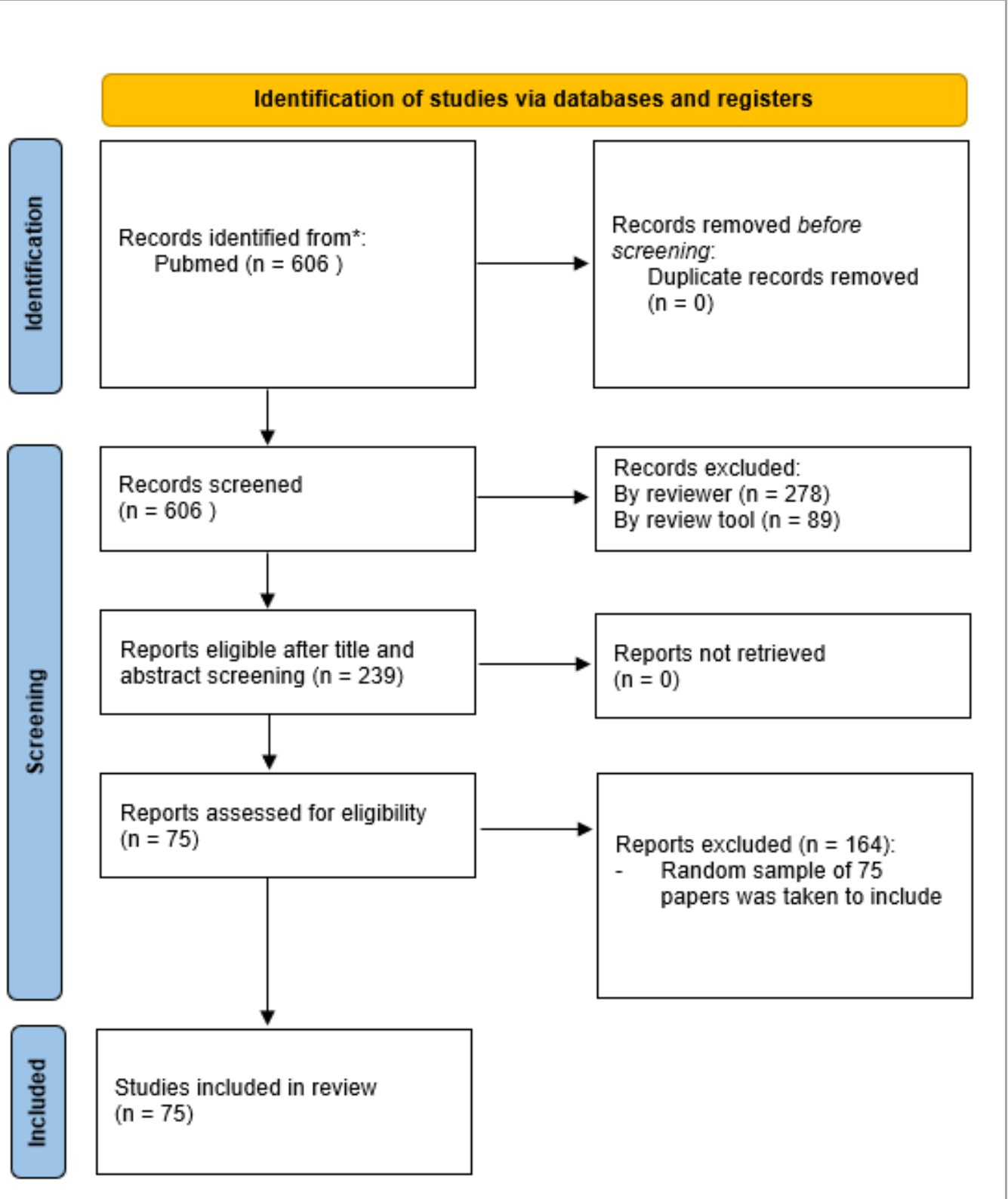
Ik onderzocht hoe studies met real-world evidence bij multipel myeloom hun efficacy- en survival-endpoints definiëren. Daarbij volgde ik de PRISMA-ScR-richtlijn en screende ik de literatuur met active learning in ASReview, met een vooraf vastgestelde stopregel. Uit een willekeurige steekproef van 75 studies haalde ik vervolgens de data. Bijna alle studies (91%) definieerden wanneer een event optrad, maar slechts 46% beschreef hoe er gecensureerd werd. Uitkomsten die op elkaar lijken, zijn daardoor vaak niet goed vergelijkbaar. De resultaten vormen de basis voor een vervolgstudie naar het definiëren van endpoints binnen de oncologie.
I studied how real-world evidence studies in multiple myeloma define their efficacy and survival endpoints. I followed the PRISMA-ScR guideline and screened the literature with active learning in ASReview, using a predefined stopping rule. I then extracted data from a random sample of 75 studies. Almost all studies (91%) defined when an event occurred, but only 46% described how data were censored. Outcomes that look alike are therefore often not truly comparable. The results form the basis for a follow-up study on defining endpoints in oncology.
606 → 239records → geschiktrecords → eligible
75studies uitgewerktstudies charted
265endpoints beoordeeldendpoints assessed
Hoe vaak werd elk onderdeel van een endpoint beschreven?How often was each part of an endpoint reported?
Wanneer het event optreedt (242 van 265)When the event occurs (242 of 265)
91%
Vanaf wanneer de follow-up loopt (146 van 198)When follow-up starts (146 of 198)
74%
Hoe er gecensureerd werd (88 van 192)How data were censored (88 of 192)
46%
Bij progression-free survival citeerde 80% van de studies de IMWG-criteria voor progressie, maar 58% gaf geen censureringsregel. Juist de onderdelen die een trialprotocol vooraf vastlegt, ontbreken het vaakst. Voor progressie bestaat een klinische standaard, voor de start van follow-up en censurering in routinedata niet. Slechts 4 studies (5%) gebruikten een real-world label zoals rwPFS.
For progression-free survival, 80% of studies cited the IMWG criteria for progression, but 58% gave no censoring rule. The parts a trial protocol fixes in advance are the ones most often missing. Progression has a clinical standard; the start of follow-up and censoring in routine data do not. Only 4 studies (5%) used a real-world label such as rwPFS.
Selectie van studies. Screening in ASReview met active learning, gestopt na 61 opeenvolgende irrelevante records; uit de 239 geschikte studies werd een willekeurige steekproef van 75 getrokken.Study selection. Screening in ASReview with active learning, stopped after 61 consecutive irrelevant records; a random sample of 75 was drawn from the 239 eligible studies.
Scoping Review of Endpoint Definitions and Operationalisation in Multiple Myeloma Real-World Evidence Studies
MSc Research Project: ToxicologieToxicology| Divisie Farmacologie, UIPSDivision of Pharmacology, UIPS
12/2024 – 08/2025
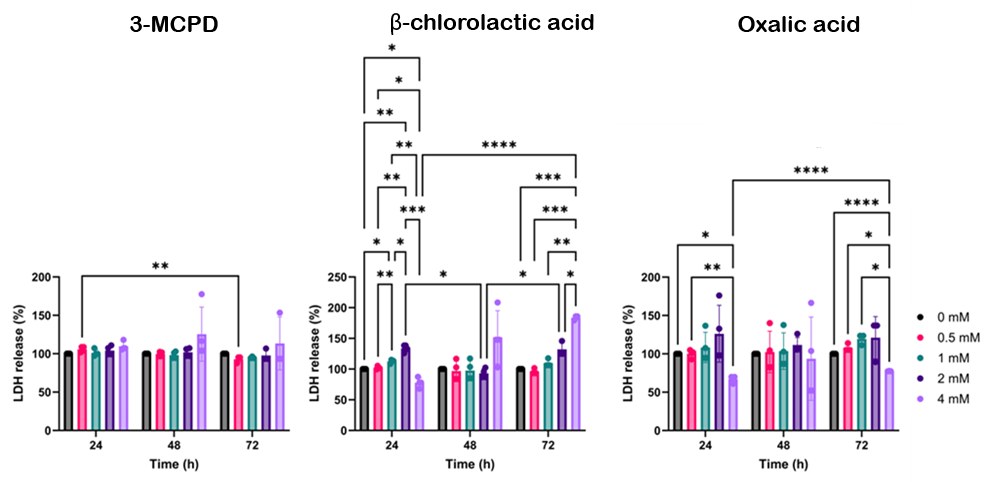
Ik onderzocht of 3-MCPD, een verontreiniging in onder meer zuigelingenvoeding, schadelijk is voor de nieren. In humane proximale tubuluscellen (ciPTECs) testte ik 3-MCPD en twee metabolieten met verschillende functionele assays, waarbij ik met fluorescentie- en absorbantiemetingen de viabiliteit, cytotoxiciteit, enzymactiviteit en DNA-schade bepaalde. De ruwe data verwerkte en normaliseerde ik zelf, en ik analyseerde de dosis- en tijdsresponsen in GraphPad Prism. Daaruit bleek dat 3-MCPD een pro-nefrotoxine is: niet de stof zelf maar de metabolieten veroorzaken de schade. Dat verschuift waar het veiligheidsrisico zit. Tussentijdse resultaten leverde ik aan een door de industrie gefinancierd toxiciteitsprogramma, en het onderzoek werkte ik uit tot een indieningsklaar manuscript.
I investigated whether 3-MCPD, a contaminant found in infant formula among other foods, is harmful to the kidneys. In human proximal tubule cells (ciPTECs) I tested 3-MCPD and two metabolites with a range of functional assays, using fluorescence and absorbance readouts for viability, cytotoxicity, enzyme activity and DNA damage. I processed and normalised the raw data myself and analysed the dose and time responses in GraphPad Prism. The results showed that 3-MCPD is a pro-nephrotoxin: the metabolites, not the parent compound, cause the damage. That shifts where the safety risk lies. I delivered interim results to an industry-funded toxicity programme and wrote the work up into a submission-ready manuscript.
3stoffencompounds
24–72 hblootstellingexposure
0,5–4 mMconcentratiesconcentrations
Nephrotoxic potential of 3-MCPD, and its metabolites β-chlorolactic acid and oxalic acid
Junior Course Coordinator | PhD Course Centre, Graduate School of Life Sciences, UU
02/2024 – 08/2024
Ik ondersteunde de coördinatie van circa 37 cursussen voor promovendi uit 15 PhD-programma's, en was via de centrale mailbox het aanspreekpunt voor deelnemers en docenten. Daarnaast vernieuwde ik grotendeels zelfstandig de cursuswebsite en de digitale nieuwsbrief.
I supported the coordination of around 37 courses for PhD candidates from 15 PhD programmes, and was the point of contact for participants and teachers through the central mailbox. I also largely independently rebuilt the course website and the digital newsletter.
BSc Research Project: Farmaco-epidemiologiePharmacoepidemiology| Divisie Farmaco-epidemiologie en Klinische Farmacologie, UIPSDivision of Pharmacoepidemiology and Clinical Pharmacology, UIPS
02/2023 – 07/2023
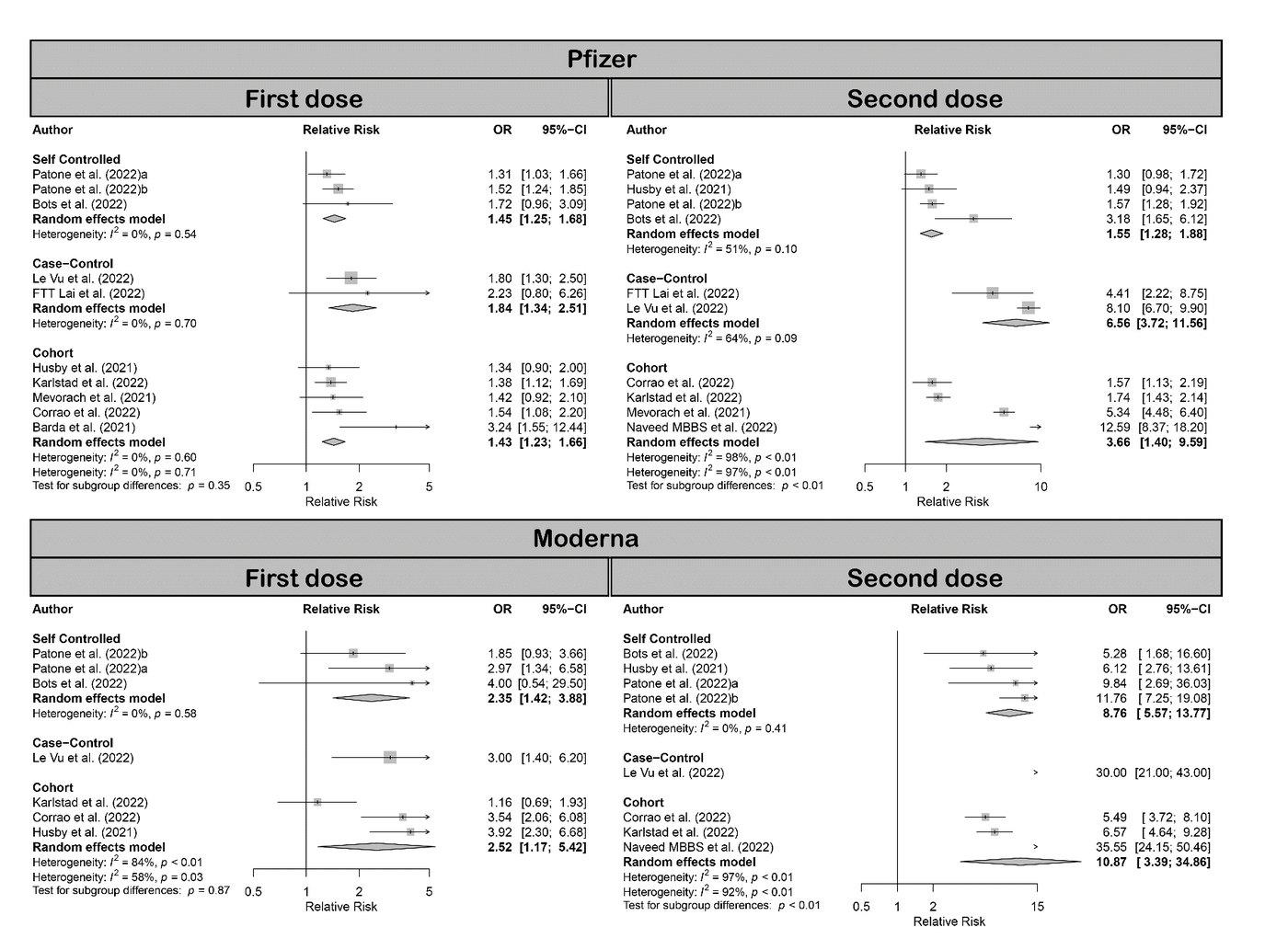
In een systematic review met meta-analyse onderzocht ik waarom studies naar het risico op myocarditis na COVID-19-vaccinatie zo sterk van elkaar verschillen. Ik stelde een zoekstrategie op voor PubMed en Embase, screende samen met een tweede reviewer 1.129 records in ASReview en beoordeelde de 12 geïncludeerde studies op risico op bias met ROBINS-I. In R voerde ik de random-effects meta-analyse uit, met subgroepanalyses naar studieopzet en follow-upduur. Studies met een self-controlled design lieten een lager risico en veel minder heterogeniteit zien (I² van 97% naar 51%), en studies met een korte follow-up juist een hoger risico. De verschillen tussen studies kwamen dus vooral door de opzet, niet door het werkelijke risico.
In a systematic review with meta-analysis I investigated why studies on the risk of myocarditis after COVID-19 vaccination differ so much. I built a search strategy for PubMed and Embase, screened 1,129 records with a second reviewer in ASReview, and assessed the 12 included studies for risk of bias with ROBINS-I. In R I ran the random-effects meta-analysis, with subgroup analyses by study design and follow-up length. Self-controlled studies showed a lower risk and far less heterogeneity (I² from 97% to 51%), while studies with short follow-up showed a higher risk. The differences between studies came mainly from their design, not from the true risk.
1.129 → 12records → studiesrecords → studies
I² 97% → 51%alleen self-controlledself-controlled only
7,8cijfergrade
Systematic review of observational studies on myocarditis post COVID-19 vaccination. Van Hoof & Bots.
Via telefoon en chat hielp ik klanten met vragen over contracten, facturen en klachten. Ik zocht steeds naar het onderliggende probleem in plaats van alleen de gestelde vraag te beantwoorden, waardoor klachten ook echt werden opgelost. Op Net Promoter Score stond ik regelmatig in de top 3 van het team.
By phone and chat I helped customers with questions about contracts, invoices and complaints. I always looked for the underlying problem instead of only answering the question asked, so complaints were actually resolved. On Net Promoter Score I was regularly in the team's top 3.